Multisensory Therapy – Supporting a Child’s Development Through the Senses
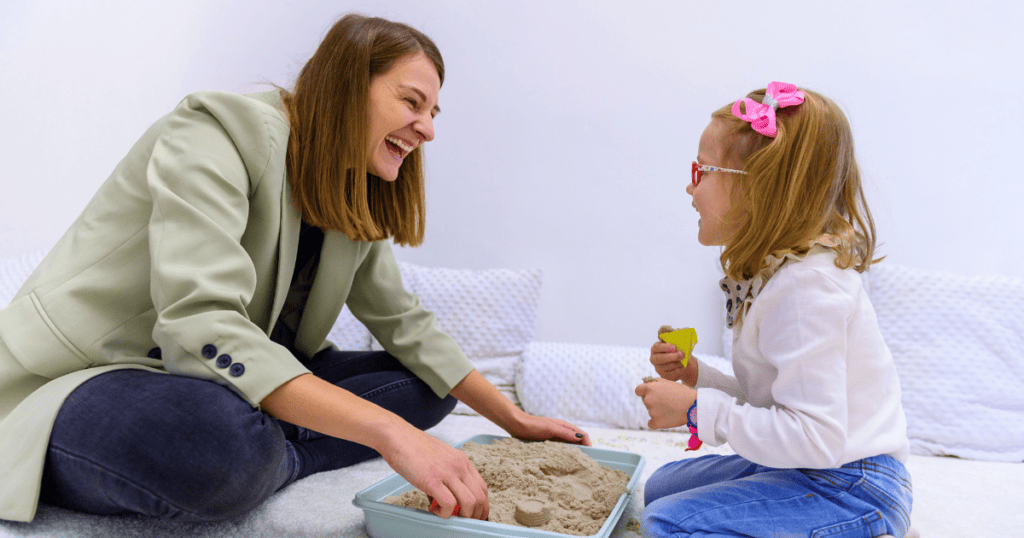
Children explore the world using all of their senses at the same time. They touch, observe, listen, smell, taste, and continuously gather information about themselves and their surroundings. Multisensory therapy is based on these natural learning experiences.
Multisensory therapy is a therapeutic approach that simultaneously engages multiple senses. In speech and language therapy, it plays a particularly important role by supporting communication, perception, attention, and sensory integration. Carefully selected sensory experiences help children better understand the world around them, build relationships, and develop language skills.
This type of therapy makes use of a child’s natural curiosity and desire to learn through experience. The more senses involved in the learning process, the more effectively the brain processes and retains new information.
Touch – The First Sense That Helps Us Explore the World
Touch is the very first sense to develop. Even before birth, babies respond to tactile stimuli, and after birth, touch becomes essential for building a sense of security, body awareness, and understanding of the surrounding environment.
During multisensory therapy, we use a variety of tactile experiences, including sensory dough, kinetic sand, materials with different textures, temperatures, and levels of firmness, as well as massage techniques and fine motor play.
These activities support sensory integration, fine motor development, and emotional regulation. They also help children tolerate different sensory experiences and respond appropriately to environmental stimuli.
WORTH TO KNOW
Some children actively seek strong tactile sensations, while others avoid them. Both patterns can affect everyday functioning, play, eating, and communication. Observing a child’s response to tactile input is therefore an important part of planning an effective therapy programme.
Vision – An Essential Channel for Learning
Vision is one of the most important ways children receive information. Through sight, they observe their surroundings, recognise faces and objects, and learn about relationships between events.
Speech and language therapy incorporates a variety of visual supports, such as pictures, symbols, picture sequences, and colourful sensory materials.
Visual stimulation enhances attention, visual-motor coordination, communication skills, and the ability to analyse and organise information. It also supports the understanding of concepts and everyday relationships.
Hearing – The Foundation of Speech Development
Proper auditory processing is fundamental to speech and language development. For this reason, multisensory therapy also includes listening activities that help children distinguish sounds, recognise rhythm, melody, and speech intonation.
Therapeutic sessions often involve musical instruments, songs, nursery rhymes, natural sounds, and phonemic awareness activities.
Auditory stimulation supports language development, auditory memory, and communication skills. It may also help reduce excessive tension and improve concentration.
Smell – A Sense Closely Connected with Emotions
Although often overlooked, the sense of smell plays an important role in creating experiences and memories. Carefully selected scents can influence a child’s emotional state, level of arousal, and readiness to participate in therapy.
Natural aromas such as fruits, herbs, spices, and selected essential oils are commonly used during therapeutic activities.
Olfactory exercises help children distinguish different scents while enriching their sensory experiences and engaging both attention and memory.
Taste – Supporting Oral Function Development
Taste stimulation is especially important for children with feeding difficulties, food selectivity, or oral sensory disorders.
Exploring new flavours helps develop sensory tolerance while supporting the muscles involved in speech and feeding. During therapy, children may experience sweet, salty, sour, and bitter tastes, as well as foods with different temperatures and textures.
Taste-based activities promote oral motor development, prepare the speech mechanism for accurate articulation, and help build positive experiences related to eating.
WORTH TO KNOW
For children with food selectivity, the goal is never to force them to eat unfamiliar foods. Instead, therapy focuses on gradually introducing new tastes, smells, appearances, and textures while respecting each child’s readiness and individual pace.
Why Is Multisensory Therapy So Important?
Multisensory experiences stimulate the brain to create new neural connections. As a result, multisensory therapy enhances learning, supports speech and communication development, improves concentration, strengthens cognitive abilities, and helps regulate emotions and muscle tension.
Every child develops at their own pace, which is why therapy should always be tailored to the child’s individual needs, abilities, and sensory profile.
When properly planned and conducted, multisensory therapy becomes not only an effective form of support but also a source of joy, security, and meaningful relationships.
It demonstrates how much children can achieve through experience, play, and active exploration of the world using all of their senses.